
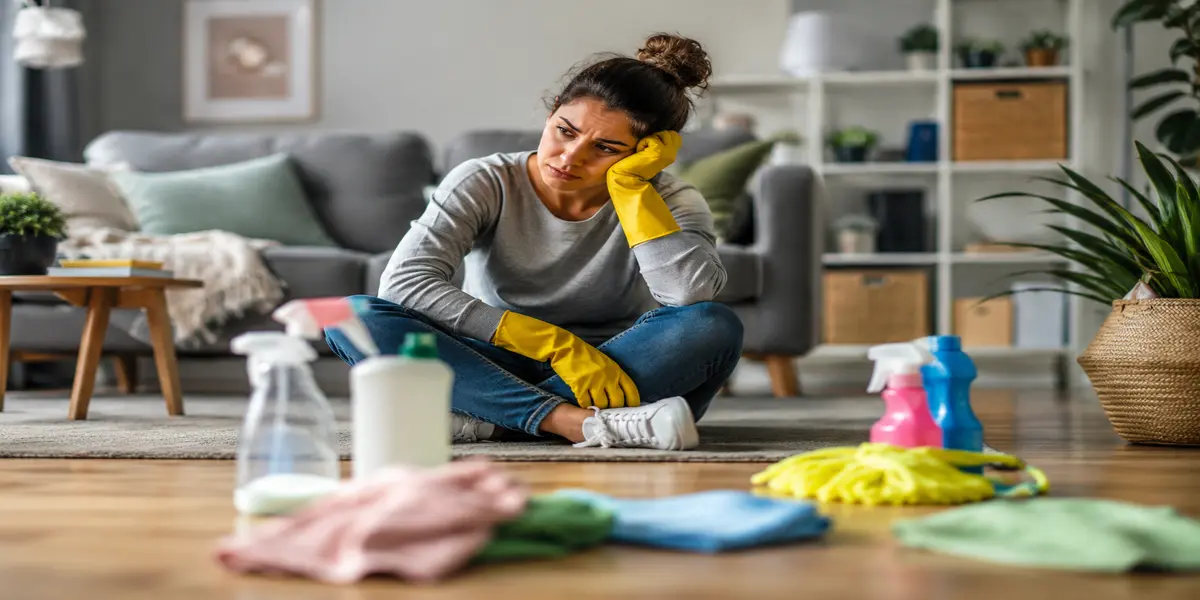
Dirty After Cleaning: Reasons Your Home Feels Off
Some Saturdays leave your arms aching from cleaning corners that seemed fine at first glance. Dust returns quickly, sneaking back despite yesterday’s effort. Here’s something odd: how come even once sixty minutes have passed, things still seem slightly out of tune? Glance across the room: walls meant to shine instead carry a kind of heaviness, a quiet unease. This puzzle shows up weekly inside our homes without warning. Ever notice how chasing that crisp sensation slips through fingers like water? It resists grip, despite effort. Let’s figure out why that clean, new sensation slips away before most people ever catch it.
1. The Problem of Hidden Dust Reservoirs
A fresh sweep often misses what lingers out of sight. Not only does grime cling to shelves, but it nests deep in couch fibers, too. As feet shift across floors, hidden specks rise like ghosts into the breeze. Most times, a fresh scent tricks us into thinking things are spotless, yet that belief rarely holds up. Heavy fragrances get sprayed around not to fix messes but to cover them quietly.
If your home feels dirty after cleaning, artificial fumes could still be hanging in the air. Long-lasting sugary scents? That could mean hidden bacteria are still alive on counters. A whiff that lingers too often hides what’s growing where you can’t see. Surfaces might seem clean yet host tiny life thanks to leftover aroma trails. Smell stays, germs often stay together without notice.
2. Wrong Ways to Clean
Most people aim for speed, yet rushing through chores usually results in wrong cleaning techniques, and sticky spots stay put. Too much cleaner gets used because someone believes stronger equals better results. That surplus lingers on surfaces instead of vanishing. What looks spotless turns out to feel grimy when walked on barefoot. Over time, that leftover layer pulls in dust and stray fibers like paper to static.
3. The Issue of Lingering Dirt After Cleaning
Did you see that gray film along the walls after washing the floor? Lingers there because cleanup usually misses tight spaces. Most people stick to open floor zones, skipping borders and shadowy gaps near furniture. Slowly, those ignored seams gather gunk nobody sees at first. The buildup shifts how light moves through a room. Suddenly, everything feels heavier, like the place never really got fresh.
4. Dirty Tools Can’t Make a Clean House
Start by thinking about that old vacuum; it could be spitting dust around instead of removing it. Cleaning gear demands care, similar to how you keep sinks or counters tidy. That sponge sitting in grime? It spreads mess more than it clears. Brushes tangled with strands won’t scrub anything properly. Ever notice the house still looks dull afterward? Check what’s in your caddy before blaming your effort. Tools worn down can undo every swipe and sweep without warning. That’s one reason professional end of lease cleaning often focuses on both surfaces and the tools used to restore them properly.
5. The Effect of Too Many Visual Elements
Some days down there feel heavy, yet the real problem might be how hard it is to face what’s visible. A kitchen wiped spotless still drags when junk mail spreads across the counter. Old gadgets sitting around do the same thing as dust, really. The mind blinks and sees disorder before details. You can’t clean out every shelf when you’re being buried in your own stuff. Things stacked high cast dark corners, shrinking the walls without moving them.
6. Neglecting the “Touch Points”
Most people forget how many microbes float around us every day. Our houses hold just as many invisible guests as the air outside does. Fingers leave behind grease on walls, creating perfect spots for small life to grow. Smudges make spaces feel unclear, even if they seem clean at first glance. A dull patch here or there tricks the eye into sensing messiness. Floors get noticed more often than other parts of a room. Hands constantly brush against switches, knobs, edges, far more than anyone tends to think. That repeated contact spreads what sticks to skin.
7. The Role of Lighting in Your Perception
Lighting shifts what you notice in a space, altering the look of cleanliness. Bright ceiling bulbs often expose small marks or grit on wooden surfaces. On the flip side, dim conditions might let grime slip by unnoticed while you work. A cleaned house may still feel unclean. Check it under changing daylight. Sunlight shows truth, uncovering flaws invisible before.
8. Pet Hair and Dander Challenges
Pets mean cleaning takes more effort and demands sharper attention. Deep inside carpets, fur plus dander dig in, resisting ordinary sweeps with the vacuum. That leftover grime? It breeds an odour clinging around like old, damp towels. Owners face endless rounds against messes that most appliances barely touch. Heavy rugs especially guard trapped hairs; common machines struggle right through each pass.
9. The Secret of Gravity-Based Cleaning
Some folks begin cleaning by pushing dirt off the floor, followed by wiping high shelves. Yet this method spreads mess instead of removing it. Dust falls down right after the broom finishes work. That means walking through grime all over again later. A thin layer sticks even when things look tidy. Flip the steps start high, finish low, and everything lands where it should. Nothing gets missed on round one.
10. Neglected Air Vents and Grilles
Most home upkeep plans skip right past the air vents. Your house breathes through them, sucking in air then sending it out again. When layers of gunk like grease or dense dust cake the openings, that filth rides along every airflow. You wipe surfaces clean only to see grime return fast, settling before you finish tidying up. Pulling a vacuum over each vent cover cuts off that cycle quietly. Particles settle without wandering off course. Stillness keeps them grounded where they land.
11. The Risks When Germs Spread Between Foods
That rag you used in the bathroom? Bringing it into the kitchen just moves trouble around. Shiny spots fool nobody. Germs hitch rides on damp fibers, settling everywhere they shouldn’t. A film builds up without warning, making freshly wiped counters seem grimy again by afternoon. Try matching cloth colors to rooms instead; red for toilets, blue for stovetops, that sort of thing. Or grab a new paper sheet each time you switch spaces. Mess gets contained when tools stay separated, vanishing only where waste ends up.
12. Hard Water and Mineral Buildup
Water hardness is an invisible enemy that can damage your home, sometimes in places you wouldn’t expect. From minerals such as calcium comes a dull film stubborn, gritty, impossible to shift with regular soap. That layer holds onto grime, giving tiles a foggy mask even after scrubbing. What looks clean isn’t always clean; acid-based cleaners cut through what others miss. Shine returns only when those deposits vanish completely. A clear surface feels different under light and touch alike.
13. The Hidden Mess Under Large Appliances
Behind appliances, crumbs pile up while nobody looks. Months pass, then clumps of gunk wedge into tight corners. Dust stacks deeper where light doesn’t reach. That lingering scent? Often comes from what hides behind heavy kitchen units. Shifting those bulky items reveals messes missed during regular wipes. Reaching further cuts down on unseen filth floating through rooms. Even kitchen drains can quietly trap buildup over time explore simple diy methods to clean your garbage disposal to tackle hidden odors at the source
Finding Peace with Your Progress
Truth is, homes are built for living, not just looking at. Spotless won’t last even close to before something changes. Feeling like it’s still messy despite scrubbing? Pause. Step back. See what really matters. Effort went into keeping things safe, clean, and livable. Chasing for flawless brings nothing but tension, takes joy away.