
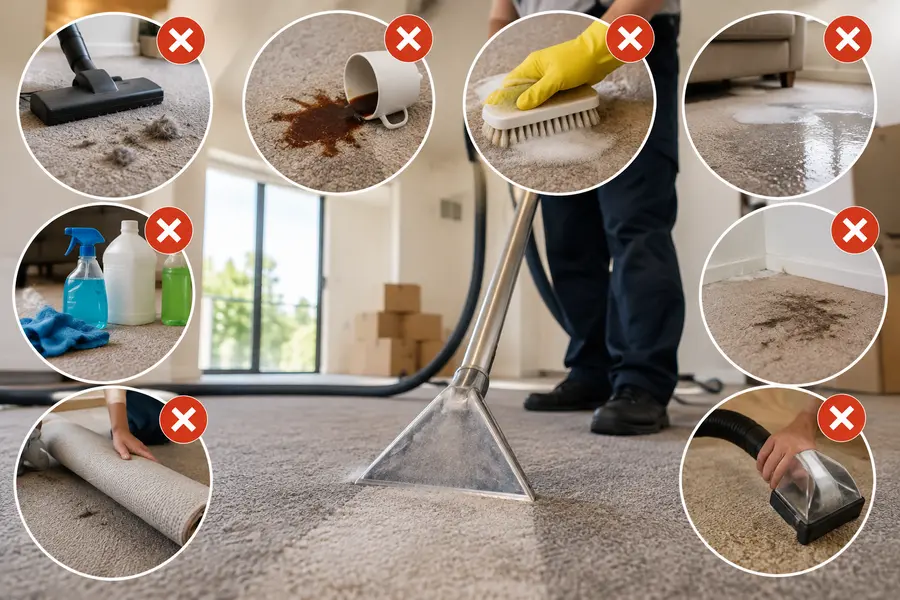
Key Takeaways
- Check your rental agreement before starting carpet cleaning
- Vacuum carpets thoroughly before using cleaning products
- Treat stains according to the carpet fibre and stain type
- Avoid soaking carpets with excessive water
- Never mix different cleaning chemicals
- Allow enough drying time before the final inspection
- Check corners, edges, stairs, and high-traffic areas
- Consider professional carpet cleaning for difficult carpet conditions
Moving out of a rental can feel stressful especially when your final inspection is looming. Carpets are usually inspect as they harbour dust, stains, odours and daily wear. A rushed clean could show marks and impact your bond. The knowledge of common blunders will help you prepare yourself adequately and avoid undue hassles. In this post, we discuss the eight lethal mistakes in end of lease carpet cleaning Sunshine Coast and some practical ways to make your carpet inspection ready.
Table of Contents
Skipping Your Rental Agreement
Another Common Clean Up Mistake Is Not Reading Your Rental Agreement First. Your agreement may have specific cleaning requirements before you vacate. Carpets may also have cleaning specifications based on the tenancy requirements. If you are aware of this, you will be able to assess and plan your cleaning schedule as a result. You also need to take into account the age of the carpet and its wear and tear. Normal wear and tear can be distinguished from damage that occurs during your tenancy. Don’t assume every mark needs a strong clean. This could be valuable evidence later on. A considered approach can save you from unnecessary cleaning techniques and allow you to focus on genuine cleaning requirements.
Vacuuming Too Quickly
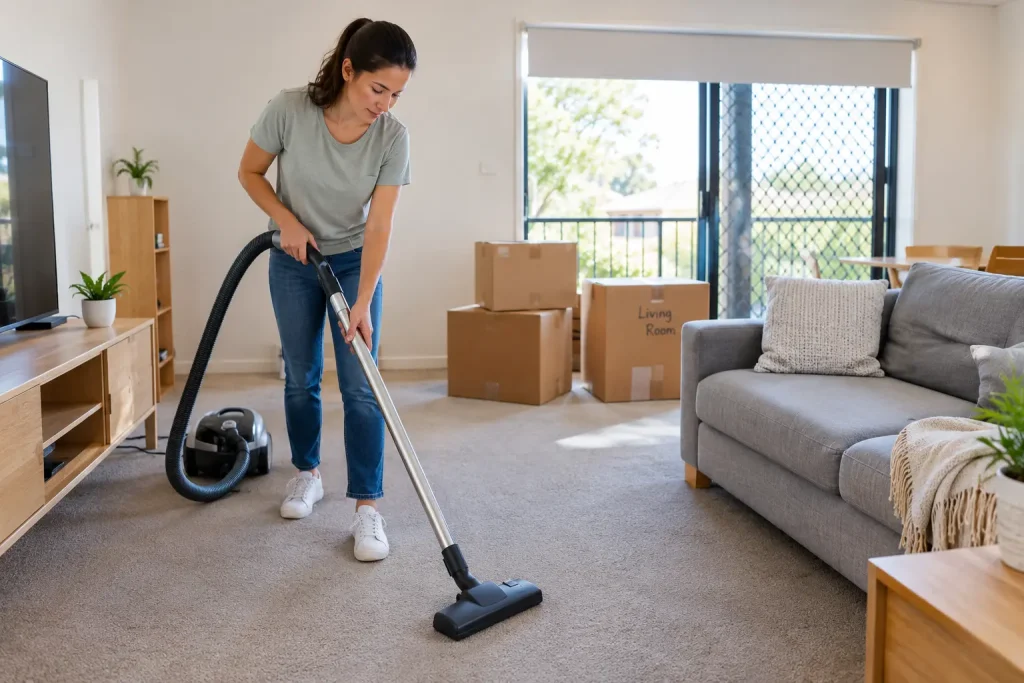
Vacuuming is an essential initial action before any wet carpet cleaning. But so many tenants skate by this step. There is an accumulation of dirt underneath furniture, along skirting boards and under edges of the carpet. Loose material can also affect stain treatment and extraction. Light furniture, if you can move it, and vacuum slowly over your carpet. Concentrate especially on hallways, doorways, sitting rooms and other busy areas. This can aid in extracting embedded dust and particles that are not firmly attached. Don’t assume that you can see the carpet means that the carpet is clean. Dust and hair can be concealed in carpet fibres. Vacuuming thoroughly also lessens the dirt that gets muddy during wet cleaning.
Using Too Much Water
Over-wetting is the most common error in carpet cleaning. Under humid conditions the evaporation of excess moisture can be slow. If it is not dried properly, wet carpet can develop a bad odour. The moisture can also penetrate to the carpet backing and underlay in extreme cases. Always read, and comply with, the instructions for your cleaning machine, or the product you have selected. Minimise traffic over-a newly cleaned carpet should be allowed to rest. Put the furniture back only after the carpet is dry. When in doubt about moisture levels, professional carpet cleaning firms have equipment to extract as needed. Effective drying is essential for a successful gear-down carpet clean in the Sunshine Coast.
Choosing the Wrong Products
Not all carpet cleaning products are appropriate for all types of carpets. The wrong chemical of cleaning may result in alteration of color, residual matter, or damage to the fibre. Even household products can be too harsh for the materials in some delicate carpets. Never use excessive detergent in your drenchpour to make the carpet look cleaner. Extra products may leave behind a sticky residue that actually attracts more dirt. If you do not know what kind of carpet fibre or stain you are dealing with, it is best not to risk it. A professional opinion might be less nerve wracking than taking chances prior to the end of your inspections.
Scrubbing Stains Too Hard
If excessive scrubbing is applied, the stain will not disappear but will be harder to remove. In addition, the pressure applied during scrubbing probably will have damaged the carpet fibers resulting in the stain spreading round or even going further down the pile. Better try to absorb any remaining with a clean, absorbent cloth. Use a blotting motion with the affected area, starting from the outside working inward. That helps prevent spreading and keeps the surface carpeted around. Different stains require different treatments. If the spot persists after a few treatments, discontinue scrubbing. Professional stain removal may be a better answer without causing you further grief if your carpet is not as durable as this one.
| Common stain | Suitable first approach |
| Coffee | Blot and use suitable carpet cleaner |
| Mud | Let it dry, then vacuum |
| Grease | Use a suitable degreasing carpet product |
| Pet accident | Blot and use an enzyme-based cleaner |
| Wine | Blot quickly and avoid aggressive scrubbing |
Ignoring Hidden Carpet Areas
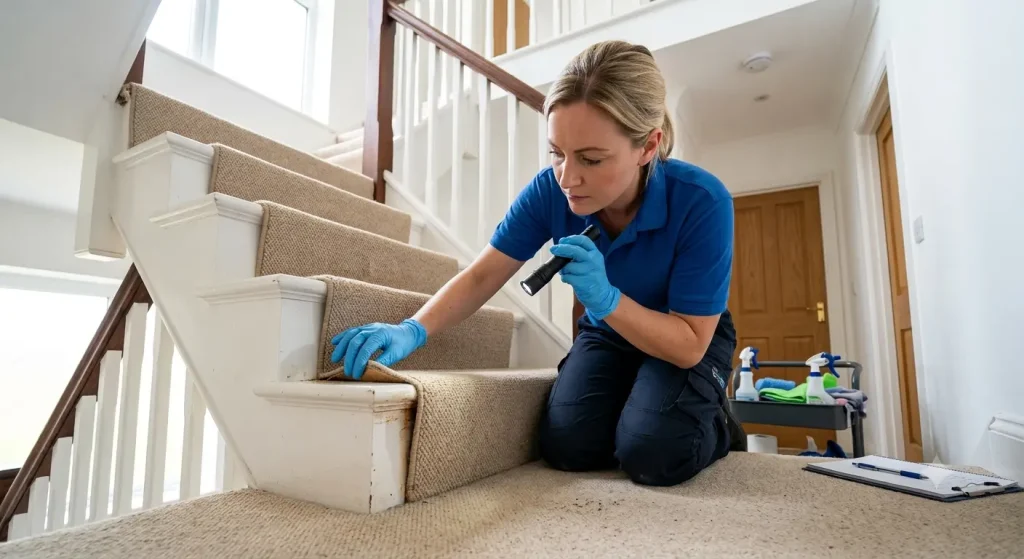
Tenants tend to look at large open rooms and so won’t notice small areas if carpeted. Pay particular attention to corners, edges, stairs , wardrobes behind furniture. Check for portable furniture and take a peek under before you go. Walkways and doorways see most of the traffic and build up dark deep stains in the high traffic areas. Check along the edges of wall-to-wall carpet for dirt to build up along the wall and under the carpet. Upon a final visual inspection, you will be able to determine if you’ve missed anything. While visualizing the property, don’t be shy, use the lighting to your advantage, and walk the carpet in all directions to get a good look.
Forgetting Carpet Drying Time
Many tenants clean up right before their final walkthrough. This can result in unnecessary stress if the carpets are still wet. Your move out cleaning checklist should include carpet drying. Begin cleaning in time to dry with good circulation. The weather can slow down moisture evaporation as well. On humid or wet days you might need to increase ventilation and use additional drying equipment. Ventilate the rooms well, until the carpet is perfectly dry. You also want to check for areas of moisture that may have been missed under corners and edges of furniture. It lets you deal with any last minute stains or odours. It also makes it easier to show during the final rental inspection.
Leaving Cleaning Until Last
It is gambling to leave cleaning the carpet until the last hours. Moving day includes packing, carrying rubbish removal and cleaning. Some carpet stains may need more than a solution. Having enough time to start early, you can evaluate the problem places and find the solution. It also allows the carpet to dry thoroughly prior to examination. Make a basic cleaning schedule a few days before you are due to hand the place back. If your carpets are heavily soiled, or if special equipment is required, then you should book professional help in good time. You can also book your place in advance, which will make for less last minute stress in the midst of a busy moving season.
| Carpet cleaning task | When to complete |
| Remove furniture and clutter | Before carpet cleaning |
| Thorough vacuuming | Before stain treatment |
| Spot stain treatment | Before deep cleaning |
| Deep carpet cleaning | With enough drying time |
| Final carpet inspection | After carpets are completely dry |
Prepare Carpets Before Inspection
A clean carpet can make a rental property appear cleaner and better maintained. Avoiding common mistakes is just as important as following the correct cleaning steps. Firstly, read your lease agreement and examine the carpet’s condition. Clear out dirt using a vacuum cleaner and pay close attention to stained areas. For example, knowing How to Clean a Coffee Spill on Carpet quickly can help you treat fresh stains before they become difficult to remove. For high-powered extraction, professional equipment can help with difficult stains and heavily soiled carpets. Do not wait until moving day to start. With a structured approach, you can fix problem areas well before the final inspection.
Frequently Asked Questions
1. Do I need professional carpet cleaning?
It depends on your tenancy requirements and carpet condition. Check your rental agreement before deciding.
2. How long does carpet take to dry?
Drying time varies with ventilation, humidity, carpet thickness, and cleaning method. Allow sufficient time before the final inspection.
3. Can I remove stains myself?
Yes, many fresh stains can receive careful spot treatment. Avoid aggressive scrubbing or unsuitable cleaning chemicals.
4. When should I clean rental carpets?
Start early enough to allow stain treatment, deep cleaning, and complete drying before handing back the property.